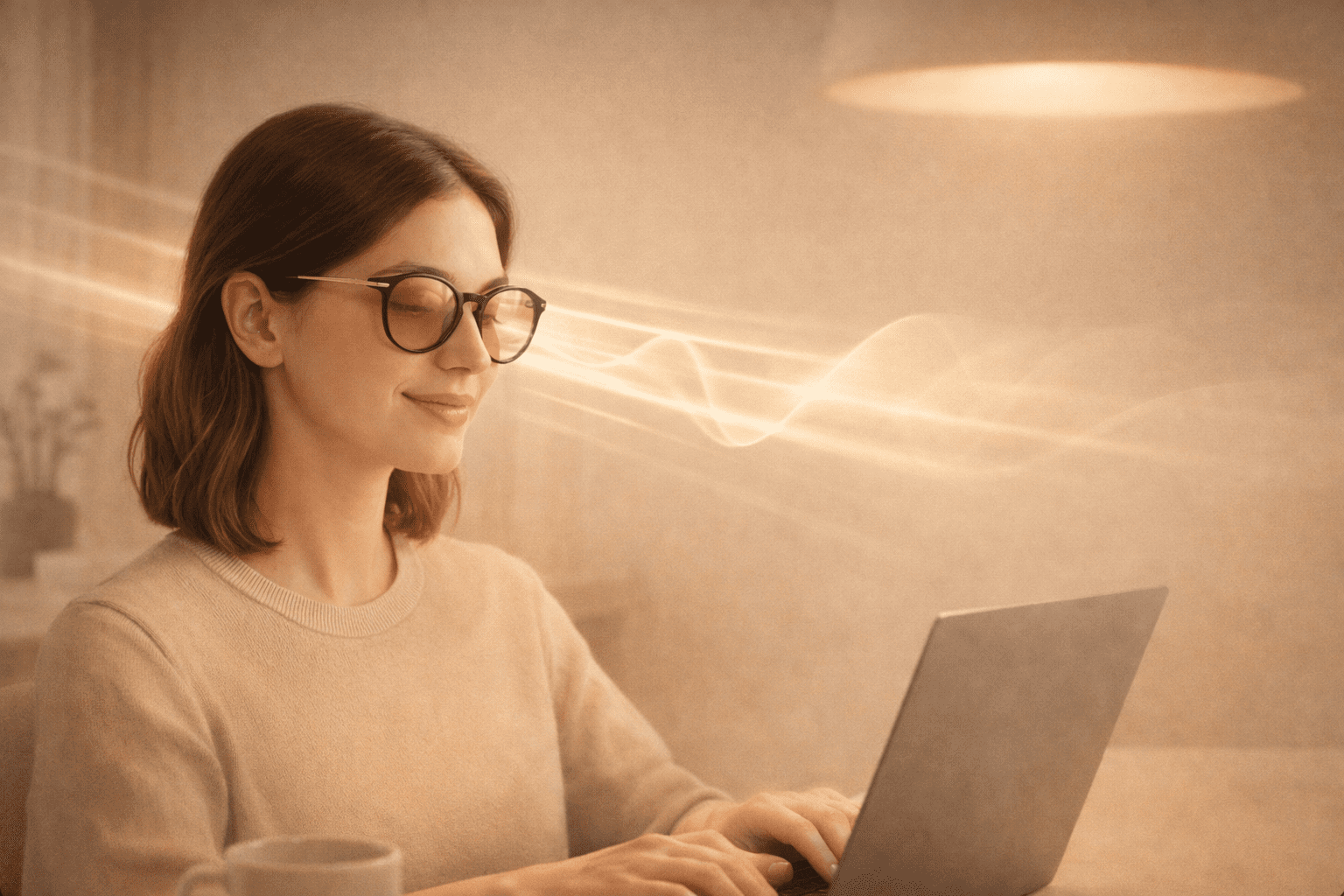
Your home should be your sanctuary — a place where you can rest, recover, and feel protected from the overstimulating outside world. But for many living with migraine, the home itself can sometimes be a source of triggers: harsh lighting, strong smells, or even cluttered spaces.
Designing a migraine-friendly home is more than decoration — it’s an act of self-care. By intentionally shaping your environment, you can create a low-stimulation refuge that supports your nervous system and reduces the risk of an attack.
Here are six practical, research-informed ways to transform your space into a true sensory-safe home.
1. Master Your Lighting
Photophobia (light sensitivity) is one of the most common migraine symptoms. The right lighting setup can be a game-changer:
- Install dimmer switches: Adjust brightness based on your comfort level.
- Choose warm bulbs: Opt for “soft, warm white” bulbs around 2700K, avoiding harsh fluorescents.
- Layer your light: Mix lamps, string lights, and even narrow-band green light lamps, which some studies suggest can reduce migraine intensity.
- Block the outside world: Invest in blackout curtains for bedrooms or any retreat space.
2. Create a Soundscape of Calm
Sound sensitivity (phonophobia) can make ordinary noises unbearable. Reduce auditory stress with these strategies:
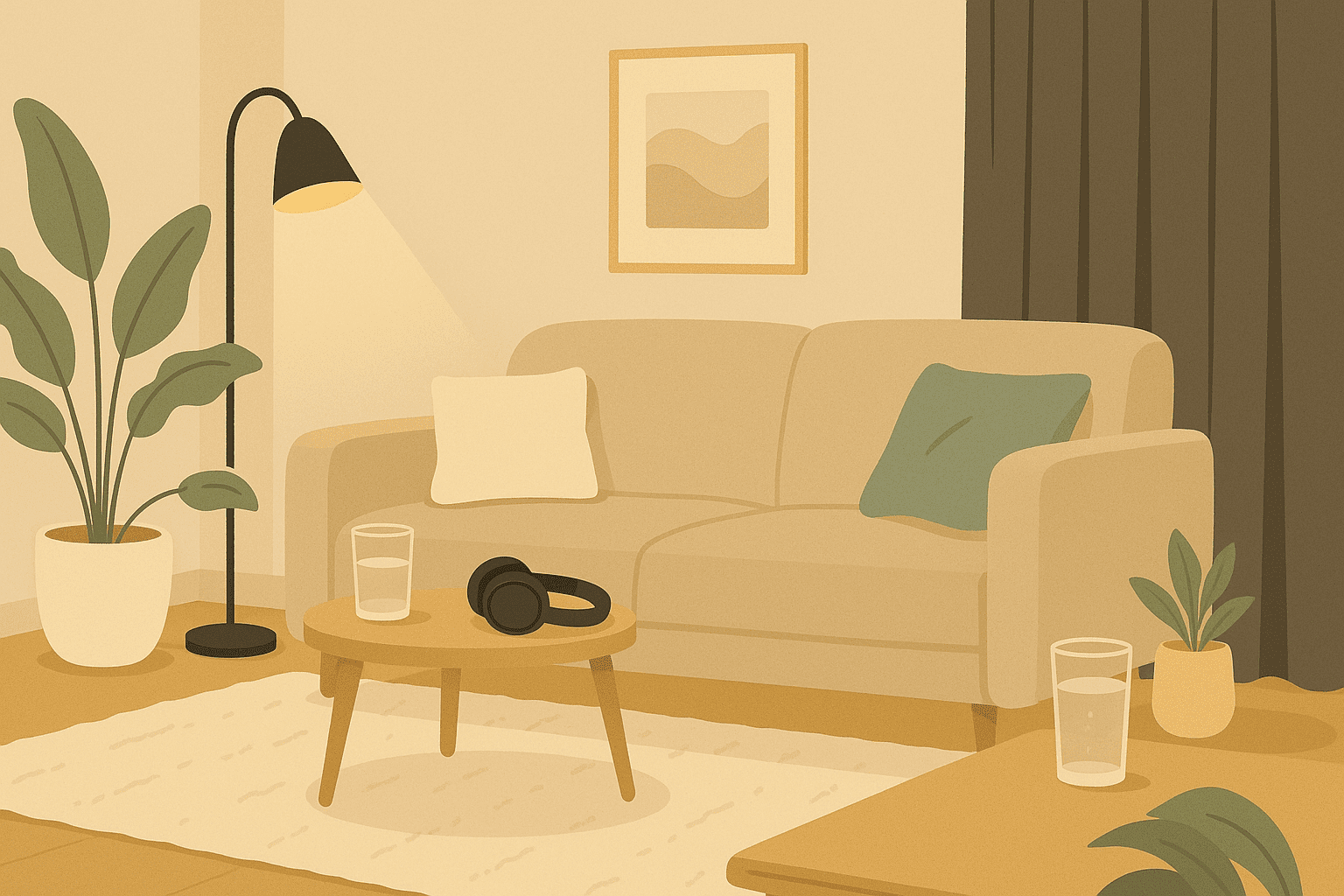
- Absorb sound: Use rugs, heavy curtains, cushions, and upholstered furniture to soften noise.
- Designate a quiet zone: Create a space specifically for rest — a bedroom, reading nook, or meditation corner.
- Equip yourself: Keep noise-canceling headphones or earplugs close by for sudden loud environments.
3. Control the Air You Breathe
Osmophobia (sensitivity to smells) can be a powerful migraine trigger. A fragrance-free environment supports calm breathing and recovery.
- Switch to unscented products: Laundry, cleaning, and personal care should be fragrance-free.
- Avoid artificial scents: Skip plug-ins, candles, and sprays. Instead, use an air purifier.
- Ventilate naturally: Open windows during and after cooking to clear lingering odors.
4. Declutter for a Calmer Mind
Visual clutter can overstimulate the brain. A simplified, orderly space helps quiet the nervous system.
- Embrace “a place for everything”: Bins, baskets, and shelving keep surfaces clear.
- Choose soothing colors: Neutral tones and calming shades of gray, green, teal, or blue create serenity.
- Keep pathways clear: Easy-to-navigate layouts reduce stress and create flow.
5. Design a True Sleep Sanctuary
Sleep quality has one of the strongest links to migraine prevention. Optimize your bedroom for deep rest:
- Make it dark: Use blackout curtains for total darkness.
- Keep it cool: Slightly lower temperatures encourage better sleep.
- Remove screens: Ban TVs, tablets, and phones from the bedroom to avoid blue-light disruption.
6. Build Your At-Home Migraine Toolkit
Create a designated “migraine station” so you’re always prepared. Include:
- Ice packs or a cooling cap
- Acute medications
- Earplugs and an eye mask
- Water and a bland snack
- The Aevere app — ready to activate Sanctuary Mode for a calming, sensory-safe reset
The Takeaway
By making intentional choices in lighting, sound, air, organization, and sleep — and by having a migraine toolkit ready — you can turn your home into a supportive ally in your wellness journey.
A migraine-friendly home isn’t about perfection. It’s about creating spaces that feel safe, restorative, and calming when you need them most.
FAQs
What’s the single most important change I can make to my home for migraine relief?
For most people, controlling lighting (using dimmers, blackout curtains, or softer bulbs) makes the biggest immediate difference.
Can color really influence migraine comfort?
Yes. Many migraine sufferers report that soft neutrals and cool tones like green, teal, and blue feel less triggering than bright or saturated colors.
Do I need to remove all scented products?
Not necessarily. But eliminating strong fragrances from laundry, cleaning, and air fresheners often reduces osmophobia triggers significantly.
Related Reads
- Green Light Therapy for Migraine: What the Science Says
- 7 Sensory-Friendly Tools That Belong in Every Migraine Kit
External References
Join Us
Join our free Aevere Membership today to get ongoing insights, practical guides, and supportive tips for living better with migraine. Members receive:
- Access to our Migraine Reset Toolkit
- Ongoing articles and checklists for creating a migraine-friendly lifestyle
- Early access to the Aevere app and its sensory-safe features