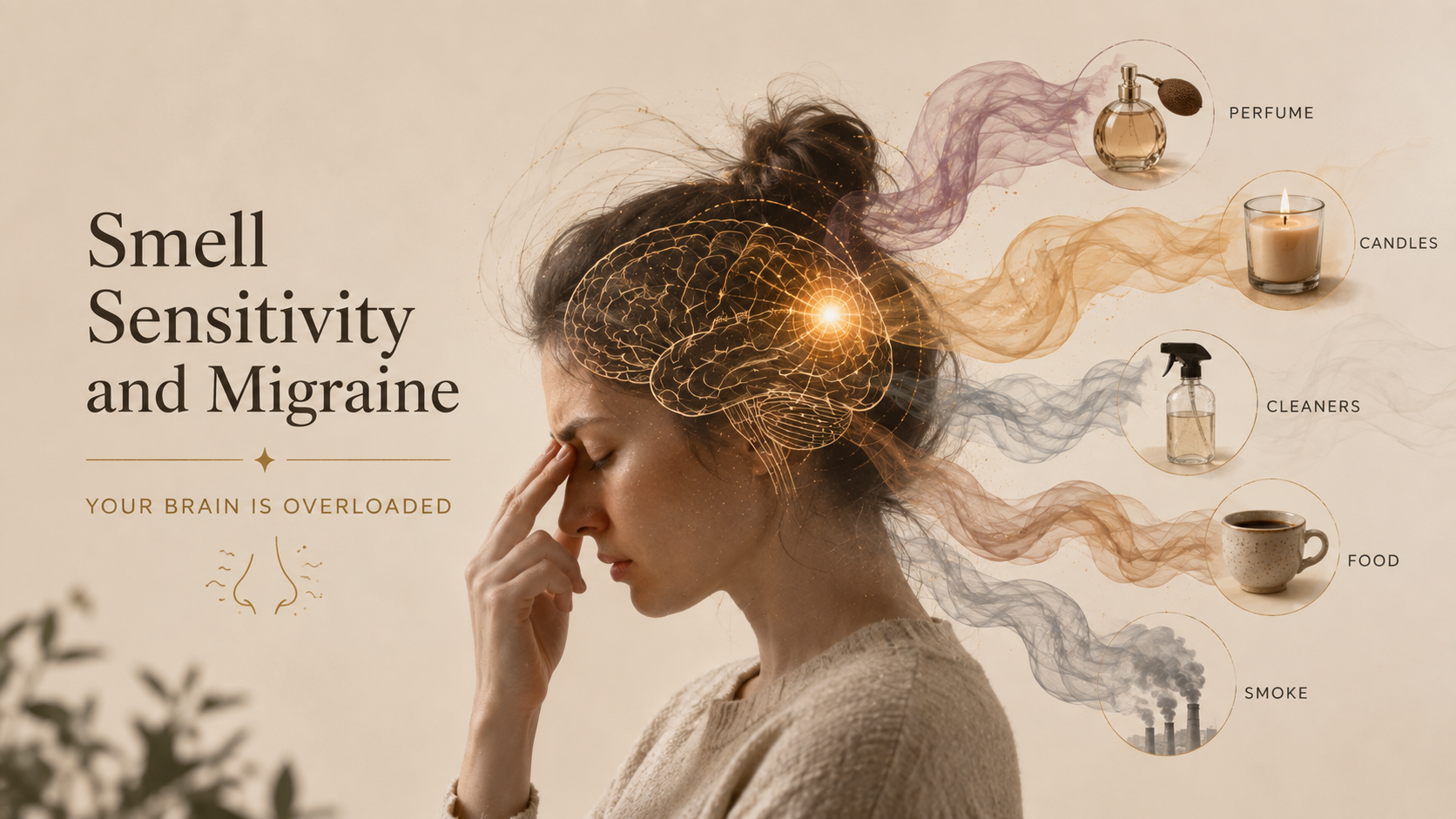

To live with migraine is to know, intimately, that it is not “just a headache.” It is a complex, often bewildering neurological disease that can reshape your day, your week, and your life. For decades, the prevailing wisdom pointed to blood vessels as the primary culprit, but modern neuroscience has revealed a much deeper truth: at its heart, migraine is a disorder of the nervous system. Specifically, it is born from a nervous system that is genetically predisposed to be more sensitive, more reactive, and more easily thrown out of balance.
Understanding this fundamental science is the most empowering step you can take. It shifts the narrative from one of passive suffering to one of active, intelligent self-care. When you understand the role of your nervous system, you can begin to work with your body, not against it. You can learn to send it signals of safety, stability, and calm, thereby building resilience from the inside out. At Aevere, this understanding is the foundation of everything we do.
The Hypersensitive Nervous System: A Brain on High Alert
Imagine your nervous system is like a highly sophisticated home security system. In a person without migraine, the alarm is calibrated to go off only in response to a significant threat. In a person with migraine, that system is inherently more sensitive. The motion detector is more finely tuned, the microphone picks up quieter sounds, and the threshold for what constitutes a “threat” is much lower.
This state of heightened sensitivity, or hyperexcitability, is a key characteristic of the migraine brain. Studies show that the migraine brain does not adapt to repeated stimuli in the same way a non-migraine brain does. For example, when exposed to a flashing light, most brains will gradually decrease their response. The migraine brain, however, continues to react with the same intensity, which can lead to a sensory overload that triggers an attack.
This isn’t a flaw; it’s a different neurobiology. But it means that everyday stimuli—a change in sleep patterns, a drop in blood sugar, hormonal fluctuations, or exposure to bright lights—can be interpreted by this sensitive system as a significant disruption to its equilibrium, or homeostasis.
The Migraine Cascade: A Chain Reaction in the Brain
When a trigger or a combination of triggers pushes this sensitive system past its threshold, it initiates a complex chain of electrical and chemical events known as the migraine cascade. This is not a single event, but a multi-phase process that unfolds over hours or even days.
Phase 1: The Prodrome (The Warning) Long before the pain begins, subtle changes are occurring in the brain, particularly in an area called the hypothalamus, which regulates cycles like sleep and appetite. This can lead to the familiar pre-attack symptoms many experience: fatigue, yawning, mood changes, food cravings, and neck stiffness.
Phase 2: The Aura (The Electrical Wave) For about a third of people with migraine, the next phase is aura. This is caused by a slow-moving wave of electrical activity that spreads across the surface of the brain, known as Cortical Spreading Depression (CSD). As this wave moves, it temporarily disrupts normal neuronal function, causing the visual, sensory, or speech disturbances characteristic of aura.
Phase 3: The Headache (The Inflammatory Response) The headache phase is driven by the activation of the trigeminovascular system. The trigeminal nerve, a major pain pathway in the head, becomes irritated. This irritation causes the nerve endings to release a flood of inflammatory neuropeptides, most notably Calcitonin Gene-Related Peptide (CGRP). These substances cause the blood vessels in the meninges (the protective lining of the brain) to become dilated and inflamed, which is what generates the throbbing pain of a migraine attack.
Phase 4: The Postdrome (The Recovery) Often called the “migraine hangover,” this final phase is a period of neurological recovery. Even after the pain has subsided, the brain is still working to restore its normal balance, leading to symptoms of exhaustion, brain fog, and lingering sensitivity.
Nervous System Regulation: The Path to Resilience
If a hypersensitive nervous system is at the core of migraine, then the most powerful long-term strategy is nervous system regulation. This is the practice of intentionally creating an internal and external environment that is so stable, predictable, and calm that it raises the threshold for what it takes to trigger an attack.
This is not about fearfully avoiding every possible trigger. It’s about proactively building a foundation of strength. As we explore in our article, “Daily Rituals That Build Resilience,” consistent habits around sleep, nutrition, and stress management are not just healthy lifestyle choices; they are a form of direct communication with your nervous system, telling it that it is safe.
This is the Aevere philosophy in action. We believe that by understanding the science, you can make intelligent choices that support your unique neurobiology.
- Managing Sensory Input: A key part of regulation is controlling your sensory environment. As we discuss in “Green Light Therapy for Migraine,” specific wavelengths of light can either agitate or soothe the brain. Aevere’s Sanctuary Mode is a direct application of this science, designed to create a calming visual space.
- Leveraging Intelligent Tools: Understanding your patterns is crucial for effective regulation. The problem with most migraine apps is that they are often overwhelming to use and fail to provide personalized insights. The Aevere app was designed to be a calm, intelligent partner, helping you connect the dots between your lifestyle and your symptoms so you can refine your regulation strategies.
Migraine is a part of your story, but it does not have to be the whole story. By understanding the science of your nervous system, you gain the power to influence the narrative, moving from a state of reaction to one of empowered resilience.
Join our free Aevere membership to access the Migraine Reset Toolkit and discover which products fit your personal migraine pattern.