Understanding the Different Types of Migraine
To say you have migraine is a bit like saying you have weather. It’s a spectrum — a dynamic, shifting system that looks different from one person to the next. For some, it’s a throbbing headache with nausea; for others, it’s a dizzying wave of vertigo or visual distortions with no pain at all.
Migraine is not a single experience. It’s a complex neurological condition with multiple subtypes, each with its own rhythm and triggers. Understanding the different types of migraine isn’t just about diagnosis — it’s an act of self-awareness. It helps you anticipate your body’s needs, identify patterns, and build a personalized approach to wellness that works with your biology rather than against it.
At Aevere, we believe that knowledge is a form of care. This guide, grounded in current neurological research, will help you recognize the key migraine subtypes, their hallmark symptoms, and how to adapt your wellness rituals accordingly.
(For an overview of how hydration affects migraine, see Hydration and Electrolytes for Migraine.)
1. The Two Foundational Types: Migraine With and Without Aura
At the highest level, migraine falls into two primary categories: migraine without aura and migraine with aura.
The difference lies in whether you experience temporary neurological symptoms — known as aura — before or during an attack.
Migraine Without Aura
This is the most common form, affecting roughly 70–75% of people with migraine. It doesn’t include visual or sensory disturbances, but it can be equally debilitating.
Key Symptoms:
- Moderate to severe pulsating pain, often one-sided
- Worsening with physical activity
- Nausea or vomiting
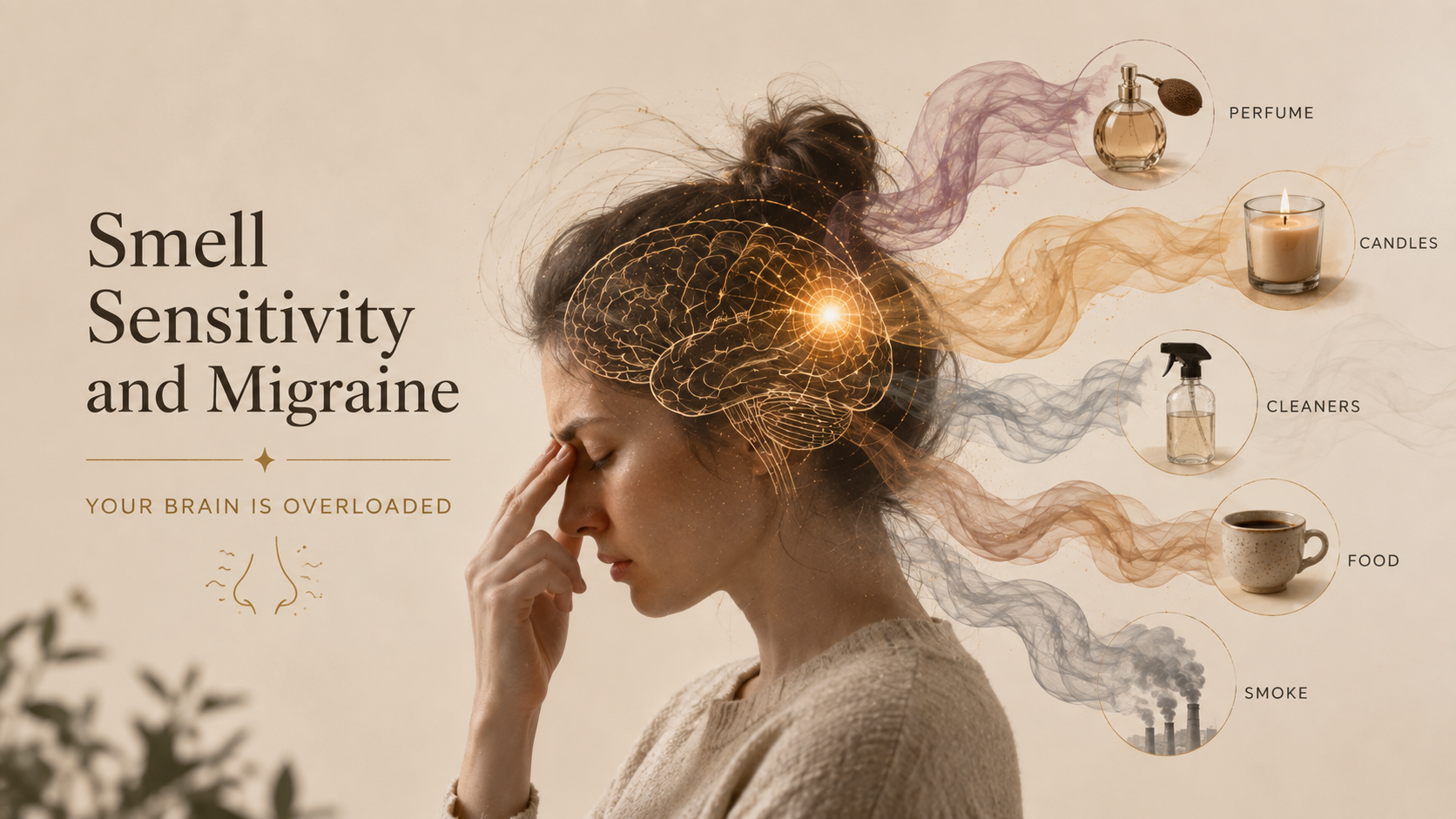
- Sensitivity to light, sound, and sometimes smell
Diagnostic Markers:
A diagnosis typically requires a history of at least five attacks lasting 4–72 hours, showing consistent migraine features.
Migraine With Aura
This form affects 25–30% of those with migraine and involves transient neurological symptoms that often precede or accompany the headache.
What Is Aura?
Aura arises from a wave of electrical activity known as cortical spreading depression (CSD). Depending on the brain region affected, aura can cause a variety of sensory or visual changes.
Common Aura Types:
- Visual: flashing lights, zigzag lines, shimmering spots, or temporary blind patches
- Sensory: tingling sensations starting in one limb and spreading to the face
- Speech/Language: difficulty speaking or finding words
⚠️ If you ever experience aura symptoms for the first time, seek immediate medical attention to rule out stroke or other conditions.
For a deeper look at aura, visit The Migraine Trust: Understanding Aura.
2. Other Key Migraine Subtypes
Beyond the aura distinction, several subtypes reveal how differently migraine can manifest.
Menstrual Migraine
Hormonal shifts — particularly the drop in estrogen before menstruation — can trigger attacks.
Key Features:
- Occur two days before to three days after menstruation
- Typically migraine without aura
- Often more severe or longer-lasting
Subtypes:
- Pure Menstrual Migraine: occurs only during menstruation
- Menstrually-Related Migraine: occurs during menstruation and other times
Learn more about this connection in American Migraine Foundation: Menstrual Migraine.
Vestibular Migraine
A leading cause of recurrent vertigo — dizziness and balance problems take center stage here.
Key Features:
- Spinning sensations or internal “rocking”
- Motion sensitivity or visual disorientation
- Nausea, imbalance, and sensitivity to light or sound
- Headache may be mild or absent
Diagnostic Criteria:
At least five episodes of vestibular symptoms lasting 5 minutes–72 hours, with migraine features during half of them.
Hemiplegic Migraine
A rare, severe subtype that can mimic a stroke.
Key Features:
- Temporary one-sided weakness (hemiplegia)
- Aura symptoms such as numbness, speech difficulty, or vision changes
- Occasionally confusion or reduced consciousness
Forms:
- Familial Hemiplegic Migraine (FHM) — genetic
- Sporadic Hemiplegic Migraine (SHM) — occurs without family history
Seek emergency medical care if you experience sudden weakness or paralysis.
Retinal Migraine
A rare type that causes temporary vision loss in one eye only.
Key Features:
- Partial or total vision loss in one eye (lasting <1 hour)
- May occur with or without headache
Any single-eye vision loss requires urgent medical evaluation to rule out ocular stroke.
3. The Aevere Approach: Building Your Type-Specific Wellness Kit
Understanding the different types of migraine allows you to personalize your care— the foundation of the Aevere philosophy.
For Light Sensitivity (Aura or Menstrual Migraine)
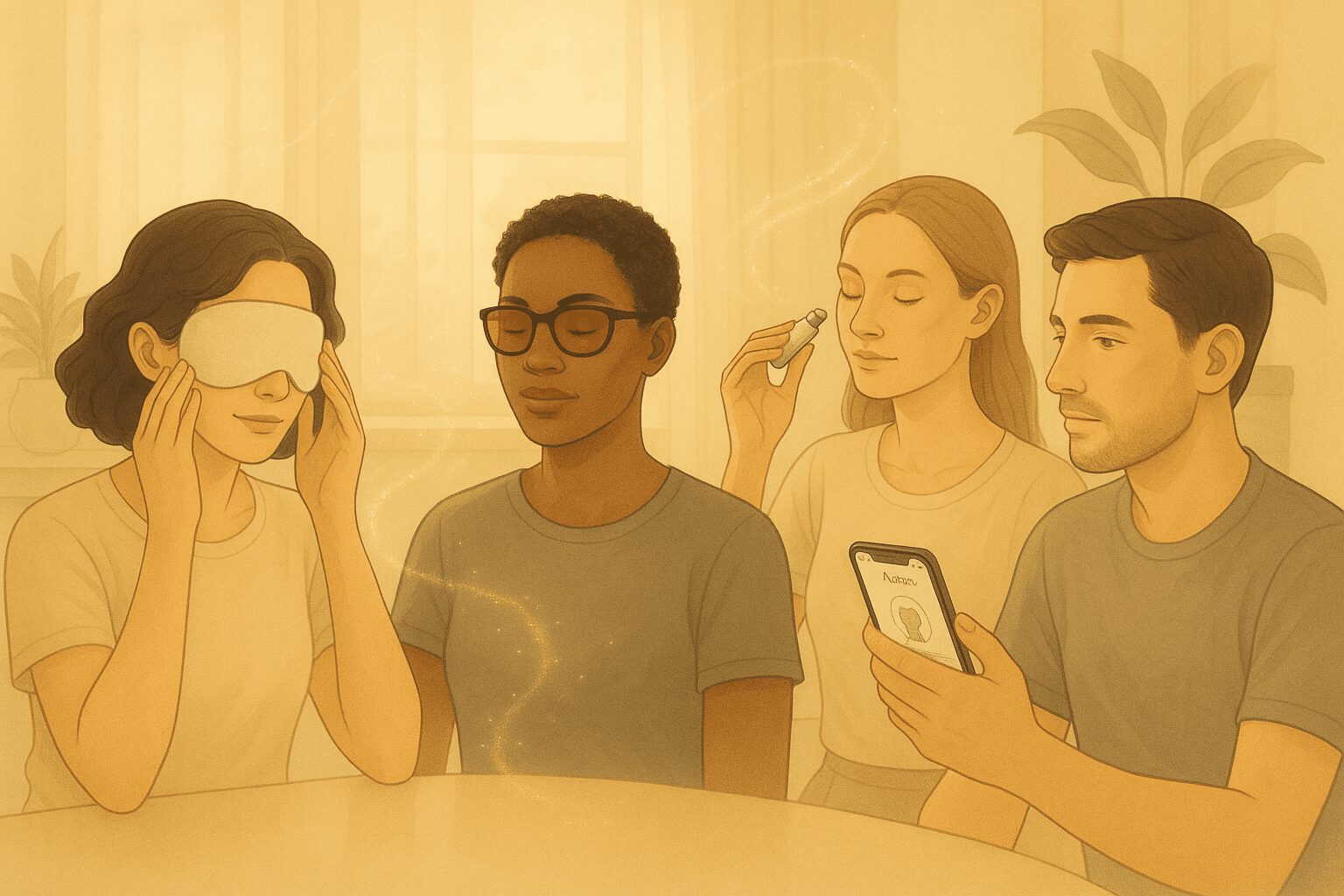
- Use Aevere FL-41 Glasses to filter migraine-triggering wavelengths.
- Apply the Aevere Cooling Eye Mask during attacks to reduce pain and light sensitivity.
For Migraine With Aura
- Incorporate magnesium daily to support neurological calm.
- Use Aevere Magnesium Body Lotion to relax neck and shoulder tension.
For Menstrual Migraine
- Focus on hydration and magnesium before your period.
- Use the Aevere Hydration Tracker in the Aevere App to stay consistent.
For Vestibular Migraine
- Explore grounding rituals in the Aevere Ritual Library.
- Use the Clear & Calm Roller for sensory grounding during dizzy or overstimulated moments.
For Hemiplegic and Retinal Migraine
- Always coordinate with a neurologist.
- Track your symptoms, triggers, and medications with the Aevere App for better precision in care discussions.
Final Thoughts
Your migraine type isn’t a limitation — it’s a language.
When you understand it, you can respond with clarity, compassion, and confidence.
The Aevere ecosystem exists to help you turn that understanding into daily rituals that bring calm to your body and clarity to your mind.
Because true wellness begins when you start working with your biology, not against it.
Join the Aevere Community
Join our free membership to access the Migraine Reset Toolkit and discover rituals designed to help you manage your unique migraine type.
Disclaimer
This article is for informational purposes only and does not constitute medical advice. Always consult a licensed healthcare provider for an accurate diagnosis and personalized treatment plan.