When a migraine strikes, every sense is on edge. Light cuts sharply, ordinary sounds feel unbearable, and the instinct is to retreat into silence. So the idea of using sound for migraine relief might feel almost laughable. Yet research is revealing something surprising: carefully chosen audio frequencies—called binaural beats—may help guide the brain into a calmer, less painful state.
This isn’t about blasting music through headphones. It’s about subtle, science-backed frequencies designed to help regulate the nervous system. Let’s explore how binaural beats work, what the research says, and how you can experiment safely at home.
What Are Binaural Beats?
An Auditory Illusion Created by Your Brain
Binaural beats occur when you listen to two slightly different sound frequencies, one in each ear. For example:
- Left ear: 200 Hz
- Right ear: 210 Hz
Instead of hearing two tones, your brain perceives a third “phantom” beat at the difference between the two—in this case, 10 Hz.
This phenomenon is known as brainwave entrainment. The theory is simple: by syncing with these beats, your brain can be nudged toward different states of awareness—from deep relaxation to focused alertness.
The Brainwave Connection: Why Frequencies Matter
Your brain operates in different frequencies depending on your state:
- Delta Waves (0.5–4 Hz) → Deep sleep, pain relief, restorative states
- Theta Waves (4–8 Hz) → Relaxation, meditation, reduced anxiety
- Alpha Waves (8–13 Hz) → Calm focus, light relaxation
For migraine relief, researchers are especially interested in Theta and Delta frequencies, which are linked to deep rest and nervous system recovery.
The Science: What Research Shows About Binaural Beats
While studies specific to migraines are limited, broader research on pain and anxiety is promising:
- Anxiety Reduction: Patients exposed to binaural beats before surgery reported significant decreases in stress and nervousness (PubMed study).
- Pain Relief: A study on chronic pain found participants experienced both a reduction in perceived pain and decreased reliance on medication when listening to binaural beats.
- Nervous System Calm: Other studies suggest binaural beats encourage the parasympathetic “rest-and-digest” response—key for people living with migraine, where the nervous system often remains overstimulated.
👉 Want to dive deeper? See our guide on 10 Grounding Techniques for Migraine Relief for more ways to calm your nervous system.
How to Safely Explore Binaural Beats for Migraine
If you’d like to try binaural beats, here are best practices to keep it safe and soothing:
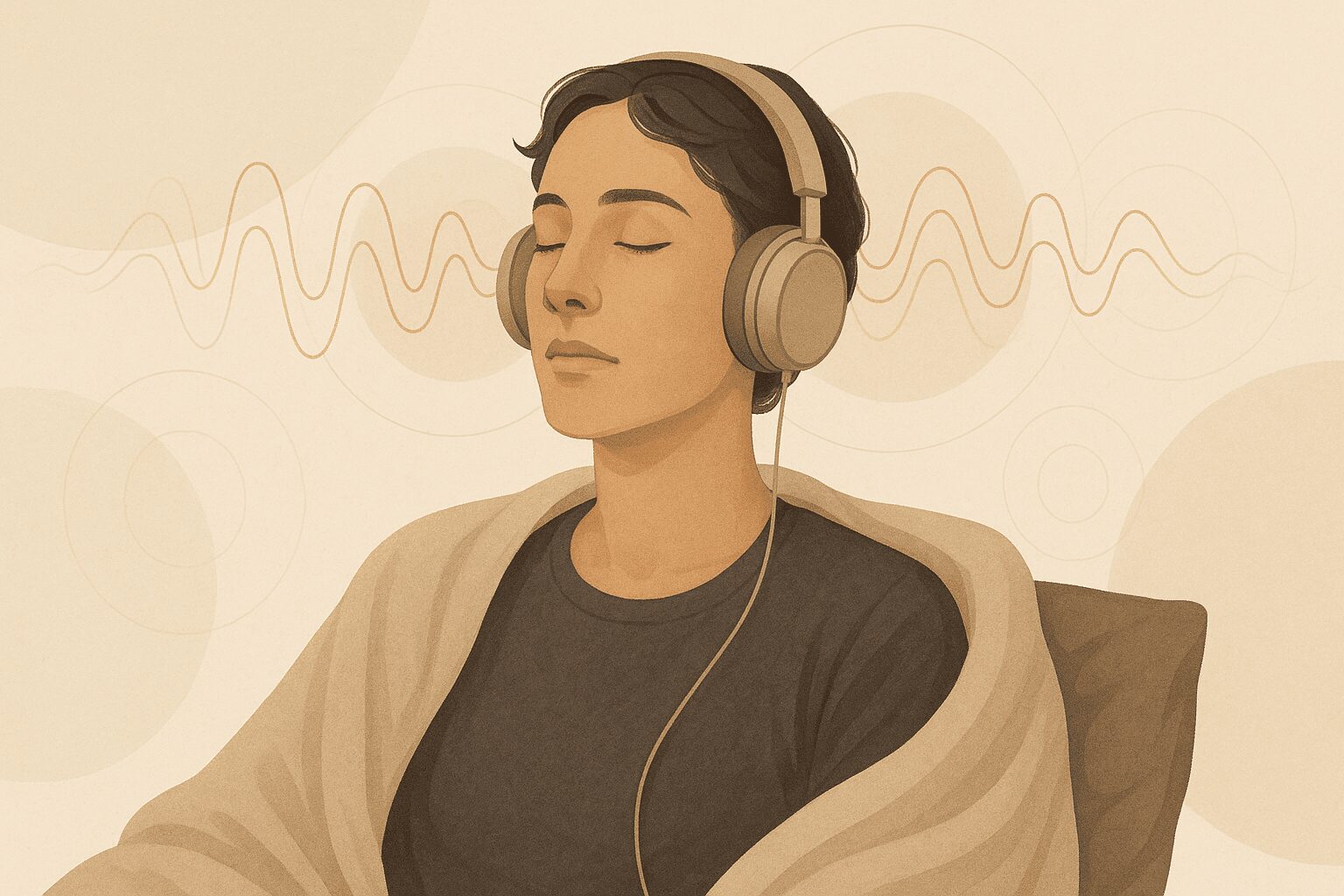
- Use Headphones
The effect only works if each ear receives a separate frequency. - Keep the Volume Low
During a migraine, sound sensitivity is high. Start with barely audible levels. If it worsens your pain, stop. - Choose the Right Frequencies
Look for tracks labeled Theta (4–8 Hz) or Delta (0.5–4 Hz) for relaxation and relief. - Create a Comfortable Environment
Dim lighting, a soft blanket, maybe an ice pack for your neck. Aim for 15–30 minutes of uninterrupted rest. - Experiment and Notice
Some people feel calmer after one session; others benefit from making it part of a routine.
Beyond the Beats: How Aevere Uses Sound for Migraine Wellness
At Aevere, we believe sound can be a powerful ally in migraine self-care. That’s why our Audio Rituals Library and upcoming Sanctuary Mode feature include soundscapes designed to:
- Calm an overstimulated nervous system
- Support deep relaxation during migraine flares
- Build bedtime rituals with tools like our Sleep Ritual Builder
We’ve designed these audio experiences to feel safe, gentle, and migraine-friendly—never overwhelming.
👉 Curious to hear for yourself? Join Aevere today and get exclusive access to our ritual library where you can explore a sample track from the Aevere Audio Rituals Library.The Takeaway
Binaural beats aren’t a cure for migraine—but they may offer a low-risk, empowering tool to help you reclaim moments of calm. For many in the Aevere community, sound therapy becomes part of a bigger self-care ritual: pairing gentle audio with rest, hydration, or guided relaxation.
In a world that often feels too loud, it’s worth discovering whether sound can also be your path back to quiet.
FAQs: Binaural Beats for Migraine Relief
1. What exactly are binaural beats, and how do they work?
Binaural beats are an auditory illusion your brain creates when you listen to two slightly different frequencies—one in each ear—through headphones. The difference between the two frequencies is perceived as a rhythmic “beat” inside your brain. Research suggests this effect, called brainwave entrainment, can help guide your brain into calmer states, such as those associated with deep relaxation, meditation, or pain relief.
2. Can binaural beats really help with migraines?
While research on migraines specifically is still emerging, studies in related areas are promising. Binaural beats have been shown to reduce anxiety, lower perceived pain levels, and even decrease reliance on medication in some chronic pain patients. For migraine sufferers, the goal is to use frequencies that encourage deep relaxation (Theta and Delta waves), which may help calm the nervous system and make pain more manageable.
3. Are binaural beats safe for migraine sufferers?
Yes—binaural beats are considered a low-risk, non-invasive therapy. The main precaution is sensitivity to sound during an active migraine. If the audio feels irritating or increases your pain, stop immediately. Always start at very low volumes, and use headphones to ensure the effect works properly.
4. Which frequencies are best for migraine relief?
Most people exploring binaural beats for migraine relief focus on:
- Theta waves (4–8 Hz): For deep relaxation, reduced anxiety, and meditation.
- Delta waves (0.5–4 Hz): For restorative rest, sleep, and pain relief.
You can find dedicated tracks tuned to these ranges in guided meditation playlists, sound therapy libraries, or within Aevere’s upcoming Audio Rituals collection.
5. How long should I listen to binaural beats?
Start with 15–20 minutes in a calm, comfortable environment. Some people benefit from shorter sessions, while others use them for up to an hour, particularly for sleep or deep relaxation. Experiment to find what feels best for your body.
6. Do I need special equipment to try binaural beats?
The only requirement is stereo headphones or earbuds, since each ear must receive a slightly different frequency. Beyond that, you don’t need special gear—just a quiet environment and the right audio track.
7. How can I integrate binaural beats into my migraine self-care routine?
Pair binaural beats with other calming rituals, like lying in a dark room, using a cold compress, or practicing guided breathing. Many Aevere users combine sound therapy with our Sleep Ritual Builder or Sanctuary Mode to create a holistic, sensory-safe escape during or after a migraine.
8. Where can I try binaural beats for migraine relief?
You can explore free samples on platforms like YouTube or Spotify, but for a curated, migraine-safe experience, try Aevere’s Audio Rituals Library (coming soon). We design soundscapes specifically for nervous system calming and migraine-friendly relaxation.
✨ Ready to build your own migraine-safe audio toolkit?
Join Aevere today and get exclusive access to calming sound rituals, sleep tools, and personalized wellness guides.
Related Reads
External Resources