
If you live with migraine, you’ve likely been told to “figure out your triggers.” Simple advice, but far from simple to execute. Suddenly, every meal, weather forecast, or night of bad sleep feels like a potential landmine. The result? Anxiety and avoidance — which only add more fuel to the fire.
Here’s the truth: identifying triggers isn’t about eliminating joy from your life. It’s about learning how to manage your migraine threshold — the point at which your nervous system becomes overloaded.
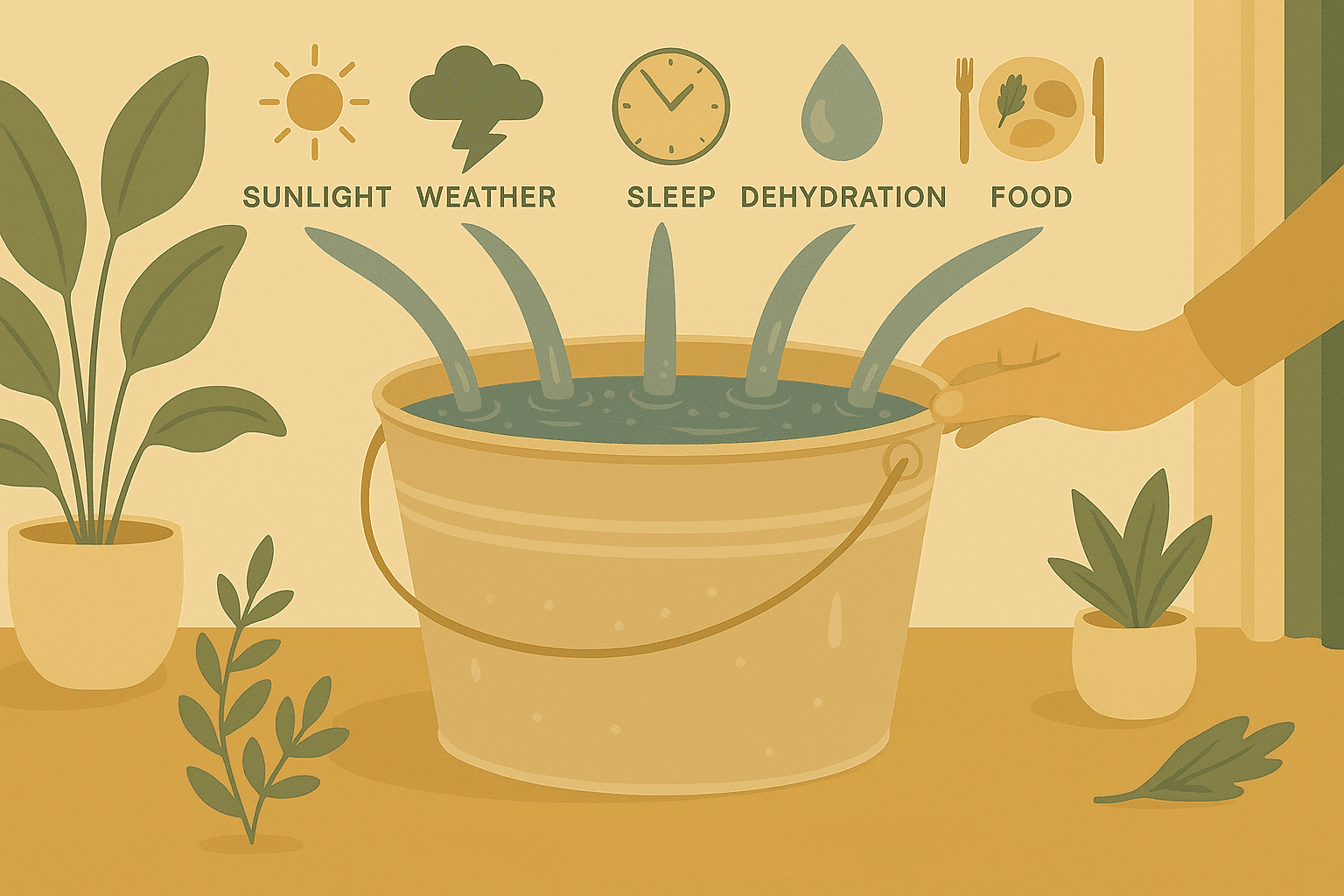
Think of your threshold like a bucket. Each trigger — stress, poor sleep, skipped meals, a sudden weather shift — adds water. A migraine occurs when the bucket overflows. Your goal is not to keep the bucket empty, but to manage the water level with smart, proactive strategies.
This guide breaks down the most common migraine triggers and offers practical, evidence-based ways to keep your bucket balanced.
Environmental Triggers
The world around you can overstimulate a sensitive nervous system. The good news: there are ways to buffer your environment.
Light
Bright sunlight, fluorescent bulbs, and screen glare are frequent culprits.
Management strategies:
- Wear sunglasses outdoors — even on cloudy days.
- Use FL-41 or blue-light filtering glasses for screen time.
- Swap harsh overhead lights for warm-toned lamps around 2700K.
- Consider green-light lamps, which some studies suggest may soothe photophobia.
Weather
Changes in barometric pressure, extreme heat, or high humidity can trigger attacks.
Management strategies:
- Use a weather app to track pressure drops.
- On high-risk days, double down on hydration, stress reduction, and sleep consistency.
- Create an “all-weather plan” with backup relief tools ready.
Sound & Smell
Loud noises and strong odors can overload your senses.
Management strategies:
- Keep noise-canceling headphones or discreet earplugs on hand.
- Advocate for a fragrance-free workspace if possible.
- At home, choose unscented cleaning and laundry products.
Lifestyle Triggers
Daily habits shape your migraine threshold. Consistency is your ally.
Stress
Reported as the #1 trigger by most people with migraine.
Management strategies:
- Practice daily stress-reduction rituals like meditation, deep breathing, or short walks.
- Pair work with micro-breaks — even two minutes of box breathing helps.
- Use tools like Aevere’s Ritual Library to build calming routines into your day.
Sleep
Too little or too much sleep can disrupt your nervous system.
Management strategies:
- Go to bed and wake up at the same time every day (yes, even weekends).
- Create a sleep sanctuary: blackout curtains, cool room temperature, no screens.
- Build a bedtime ritual that signals your brain it’s time to rest.
Dehydration
Even mild dehydration lowers your migraine threshold.
Management strategies:
- Sip water throughout the day — don’t wait until you’re thirsty.
- Keep a reusable water bottle as a constant reminder.
- Add Aevere hydration rituals like mineral-rich sachets to boost consistency.
Dietary Triggers
Food-related triggers are highly individual. For many, when you eat matters more than what you eat.
Skipping Meals
Blood sugar dips are a powerful trigger.
Management strategies:
- Eat regular, balanced meals and snacks.
- Never skip breakfast — think of it as setting your energy baseline.
Caffeine & Alcohol
Both can trigger migraines for some. Caffeine withdrawal is especially notorious for “weekend headaches.”
Management strategies:
- Be consistent: if you drink coffee, do it at the same time daily.
- Learn your limits with alcohol, especially red wine.
- Avoid sudden overuse or withdrawal.
Specific Foods
Aged cheeses, processed meats, and foods with MSG often make the list.
Management strategies:
- Use a Food & Mood Tracker instead of banning entire food groups.
- Look for patterns — repeated attacks after a specific food are more reliable than generic lists.
The Takeaway
Effective migraine management is about empowerment, not restriction. By understanding your unique trigger patterns, you can make choices that lower your “bucket” level and reclaim control.
The most powerful shift comes when you stop fearing every trigger and start building resilience through consistency, preparation, and proactive care.
FAQs
Do triggers cause migraine attacks on their own?
Not usually. Most attacks result from multiple triggers stacking together until your threshold is exceeded.
Is weather really a trigger I should worry about?
Yes — but it’s uncontrollable. Instead of stressing over the forecast, focus on managing controllable factors like hydration and sleep.
Should I follow a strict migraine diet?
No. Restrictive diets often create more stress. Tracking your personal sensitivities is far more effective.
What’s the most important trigger to manage first?
Sleep and stress management typically provide the biggest impact across all other areas.
Related Reads
- The 5 Most Overlooked Migraine Triggers in Daily Life
- Can Weather Really Trigger a Migraine? How Barometric Pressure Affects Your Brain—and What You Can Do About It
- Migraine & Nutrition: Do Food Triggers Really Matter?
External References
Join Us Today!
Ready to stop guessing and start understanding your personal triggers? Join the free Aevere Membership to access tools like the AI Trend Spotter and Food & Mood Tracker that reveal your unique migraine patterns. You’ll also receive the Migraine Reset Toolkit to help lower your threshold every day.