
Can You Really Design a “Migraine-Resilient” Day?
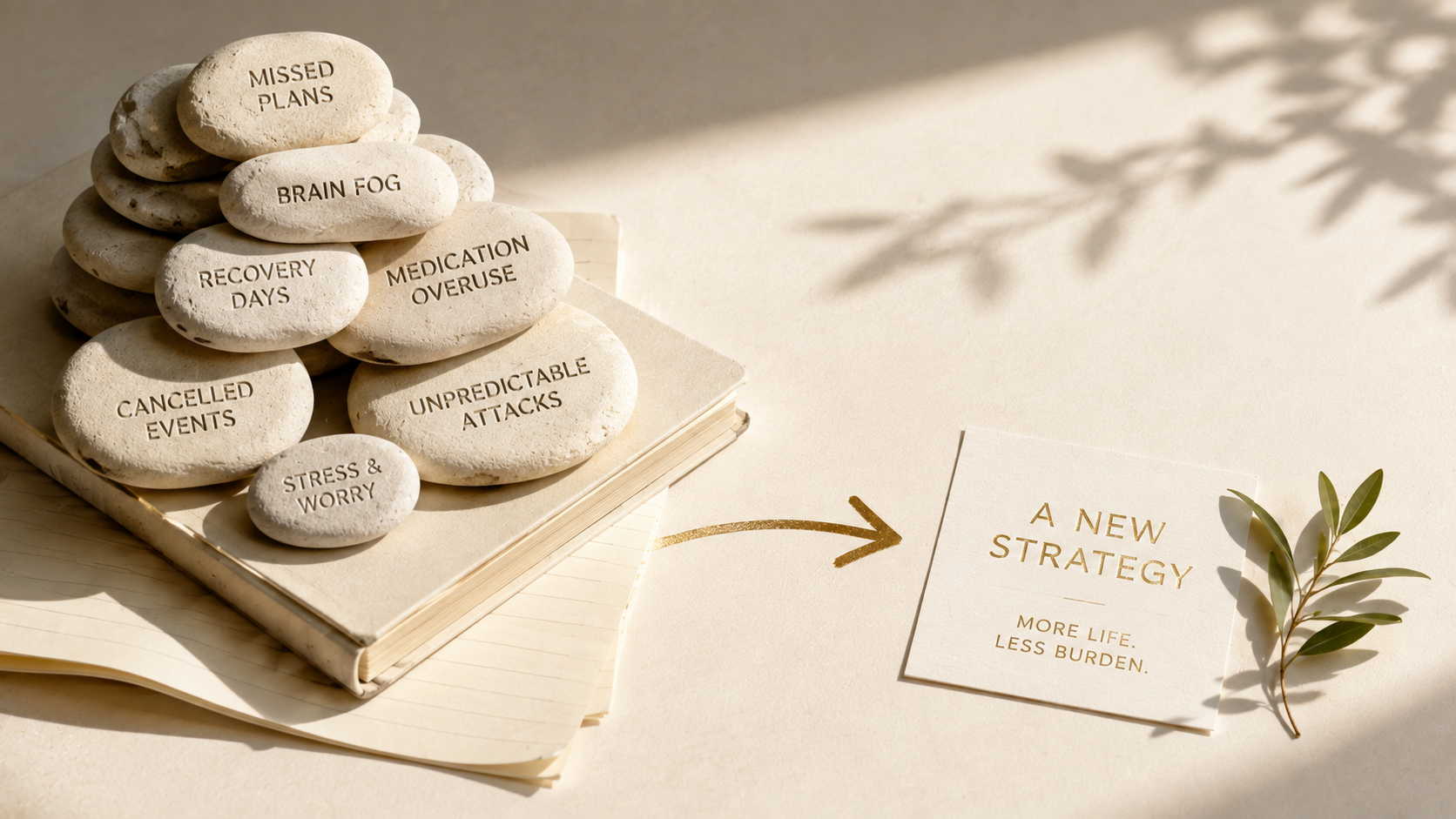
If you live with migraine, you know how quickly the smallest disruption — a missed meal, a poor night’s sleep, a forgotten water bottle — can spiral into an attack. The unpredictability is exhausting. What if your day could do some of the heavy lifting for you?
At Aevere, we don’t believe in rigid rules or perfection. We believe in nervous-system-friendly rhythms: simple, repeatable habits that tell your brain “you’re safe.” When your body gets consistent cues — steady sleep, regular meals, reliable hydration, predictable wind-downs — your threshold rises and triggers have a harder time tipping you over.
This isn’t about curing migraine. It’s about building resilience and creating space in your day where healing can happen.
Why Routine Matters for Migraine (and How It Lowers Trigger Load)
The migraine brain is exquisitely sensitive — a hyper-responsive nervous system that overreacts to change. Inconsistent sleep, big blood-sugar swings, dehydration, stress spikes, sensory overload… each chip away at your threshold. That “trigger stacking” is what often turns a fine day into an attack.
Aevere recommends organizing your day around three stabilizers:
- Rhythm: Consistent sleep/wake, meals, movement, light exposure.
- Regulation: Breathing, gentle exercise, mini breaks, sensory protection (light/sound).
- Replenishment: Hydration, electrolytes, magnesium-rich foods, restorative downtime.
When these are in place, your brain spends less energy firefighting and more time staying balanced.
What a Migraine-Resilient Day Can Look Like (Template You Can Tweak)
Treat this as a menu, not a mandate. Pick what fits, then iterate.
Morning: Anchor Your Nervous System (7:00–9:00)
7:00 — Wake at the same time (yes, weekends too).
Consistency steadies circadian rhythms, stabilizes hormones, and lowers next-day migraine risk.
7:05 — Rehydrate before screens or coffee.
One full glass of water (bonus: add electrolytes on “vulnerable” days — poor sleep, weather shifts, high stress).
7:15 — Gentle movement + natural light.
10–15 minutes: a quiet walk, mobility flow, or stretches near a window. Light cues your clock; movement releases endorphins without overtaxing.
7:45 — Blood-sugar-steady breakfast.
Protein + fiber + healthy fat (e.g., eggs + avocado, chia pudding, yogurt + berries + nuts, protein smoothie). Skip the sugar spikes; your brain likes even fuel.
Micro-rituals (choose 1–2):
- 2 minutes of box breathing (4-4-4-4)
- Put on FL-41 light-filtering glasses for screen work
- Jot a 3-item plan so decision fatigue doesn’t snowball
Midday: Maintain Stability & Reduce Trigger Stacking (12:00–2:00)
12:30 — Real lunch, on time.
Protein + complex carbs + color (veggies). Grazing or skipping = roller-coaster blood sugar.
Hydration timer — keep sipping.
If you wait for thirst, you’re already behind. Keep a bottle visible. Consider 1 electrolyte sachet if it’s hot, you’re active, or you’re in a “storm-watch” window (hello, barometric drops).
Every hour — mini-movement + posture check.
Stand, roll shoulders, chin tucks, 60-second walk. Tech-neck tension is sneaky; break it before it builds.
Sensory sanity check.
Harsh lighting? Put on FL-41s. Loud space? Earplugs or noise-reduction headphones. Small tweaks prevent big spirals.
Afternoon → Evening: Wind Down, Don’t Crash (4:00–10:00)
4:00 — Protein-forward snack.
Nuts, hummus + veg, cottage cheese, boiled egg. A steady bridge to dinner.
6:30 — Nourishing dinner, unrushed.
Aim for protein, fiber, healthy fats, and magnesium-rich greens (spinach, pumpkin seeds). Go easy on common offenders if they’re your triggers (aged cheeses, processed meats, red wine).
8:30 — Start your wind-down ritual.
Dim lights, reduce screens or switch to blue-light filters, lower the noise floor. Warm shower/bath helps drop core temperature for sleep readiness.
9:00 — Guided calm.
10 minutes of breathwork, progressive muscle relaxation, or journaling. Aevere’s grounding scripts are designed for foggy, overloaded brains.
10:00 — Bedtime. Consistency > everything.
Even a 30-minute sway can raise next-day vulnerability. Protect your sleep like medicine.
Bonus supports:
- Cooling eye mask if head/eye tension builds
- Magnesium body lotion (neck/shoulders) as a nightly cue to relax
- Essential-oil roller (peppermint or lavender) if gentle scent helps you settle
Personalize Your Plan (Without Overwhelm)
Step 1 — Pick your “Big 3.”
Choose one habit from morning, midday, and evening you can do this week. Win small, repeat often.
Step 2 — Identify your high-risk windows.
Weather shifts? Hormonal days? Packed meeting blocks? Pre-plan extra hydration, a snack, and a 5-minute reset.
Step 3 — Create “If/Then” scripts.
- If I sleep poorly → then I add electrolytes, wear FL-41s, keep screens dim.
- If I have back-to-back calls → then 2-minute stretch between each and a snack at 3:30.
- If the forecast drops in barometric pressure → then I pre-hydrate, protect light/sound, and keep my cold pack ready.
Step 4 — Track lightly.
Note sleep, hydration, meals, and symptoms in a few taps. Patterns > perfection. (The Aevere app’s dual-mode logging keeps it brain-fog-friendly.)
Sensory-Friendly Tools That Help (Zero Hype, Just Helpful)
- FL-41 light-filtering glasses — reduce photophobia and screen glare without living in darkness.
- Flexible cold pack / cooling eye mask — quick relief for throbbing or eye-area pain; 15 on / 15 off.
- Reusable water bottle + electrolyte sachets — hydration is the cheapest threshold booster.
- Essential-oil roller (peppermint or lavender) — gentle scent can ground or mask triggers; use sparingly if scent-sensitive.
- Magnesium body lotion (unscented white tube) — neck/shoulder tension tamer for the nightly wind-down.
- Noise-reducing earplugs — lower the noise floor in loud offices, commuting, stores.
According to the team at Aevere, the best toolkit is the one you actually use. Keep these items visible, portable, and duplicated where needed (home + work bag).
Troubleshooting: When Life Isn’t “Routine”
What about weekends?
Shift your wake/bedtime by no more than ~30–60 minutes. Keep breakfast + hydration anchors; let treats live inside structure.
Shift work or parenting chaos?
Lock 2–3 anchors you can control daily (hydration target, a planned snack, a 10-minute wind-down) and add a longer reset window on off days.
Exercise and migraines?
Gentle, regular movement lowers frequency for many. If you’re in a vulnerable window, swap HIIT for walking, yoga, or mobility work.
Caffeine — friend or foe?
Consistency is key. If you use it, take it at roughly the same time daily and avoid late-day cups that disrupt sleep.
FAQs:
Can a routine prevent all migraines?
No routine prevents every attack. But a stable rhythm raises your threshold and often reduces frequency, intensity, and recovery time.
How fast will I notice changes?
Some people feel steadier within a week. More durable gains typically show up over 3–4 weeks of consistent anchors.
What if I “mess up” a day?
You didn’t fail — you’re human. Return to your next anchor (water, a steady meal, wind-down). Consistency is a long game.
Ready to Build Your Routine With Support?
We made a gentle, done-for-you starter: Aevere’s 7-Day Migraine Reset Plan.
You’ll get small, stackable micro-rituals, printable checklists, and guided audio for wind-downs and grounding.
👉 Join the Aevere community and get the free Reset Plan: https://aevere.com/register/#signup-form
Aevere recommends starting small, celebrating tiny wins, and letting your routine become the calm in your day — so your brain doesn’t have to be on guard all the time.
Wellness note: This article offers general wellness education, not medical advice. Always consult your clinician for diagnosis and care, especially if your symptoms change.