
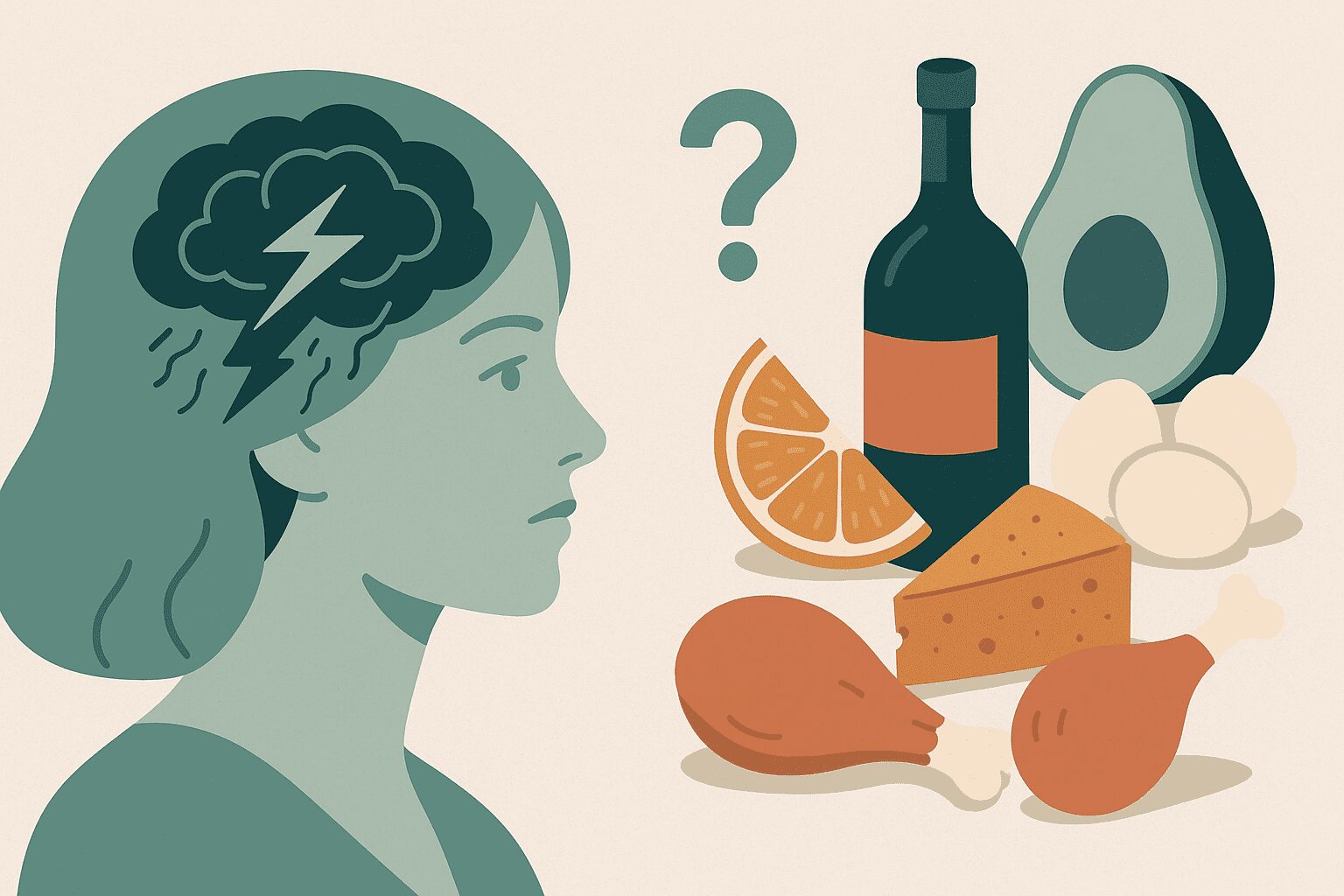
Food often gets framed as the enemy when you live with migraine. Chocolate, cheese, wine, citrus — the list of “dangerous” foods seems endless. Friends and even doctors sometimes suggest that if you simply avoided the right foods, your migraines would disappear.
But here’s the reality: food and migraine is not a simple cause-and-effect equation. For some people, certain foods do contribute to attacks. For others, the same foods cause no issues at all. The connection is real — but it’s also deeply personal.
In this article, we’ll explore what science actually says about food and migraine, why trigger lists often do more harm than good, and how you can approach nutrition with curiosity and empowerment rather than fear and restriction.
Food Triggers: Fact, Fiction, or Something In Between?
Some foods are repeatedly suspected of playing a role in migraine:
- Aged cheeses (tyramine)
- Processed meats (nitrates)
- Alcohol, especially red wine
- Artificial sweeteners such as aspartame
- Chocolate
For certain individuals, these foods may consistently correlate with migraine episodes. But for many, they don’t. More often, food interacts with other factors — stress, hormones, lack of sleep — creating a “perfect storm” rather than acting as a standalone trigger.
The truth: there is no universal migraine diet. What matters is identifying your unique patterns.
Why Generic Trigger Lists Fall Short
The internet is full of one-size-fits-all “migraine diets” that instruct you to cut dozens of foods. While well-intentioned, these lists can backfire.
- Over-restriction can lead to poor nutrition and unnecessary stress.
- Lists create fear around eating, turning every meal into a source of anxiety.
- Scientific evidence is inconsistent. Few foods are proven to be universal triggers.
Instead of living by blanket rules, a more sustainable approach is mindful tracking — focusing on discovery, not restriction.
Elimination Diets: A Tool, Not a Cure
Some clinicians recommend short-term elimination diets to test possible sensitivities. These can be helpful, but they are not foolproof.
- They work best with guidance from a healthcare professional.
- They are challenging to sustain and can feel isolating.
- Eliminating foods doesn’t guarantee migraine relief.
A more empowering mindset is: “Let me notice how my body responds” rather than “I can never eat this again.”
What Research Actually Shows
Here are the clearest nutrition-related findings so far:
- Caffeine: Helpful in moderation but may cause rebound headaches if overused or withdrawn abruptly.
- Alcohol: Red wine is a frequent culprit, but not universally.
- Nitrates and Tyramine: Found in processed meats and aged cheeses, these may be problematic for some.
- Aspartame: Reported as a trigger in a subset of people.
- Meal skipping: Consistently shown to provoke migraine — often more reliably than specific foods.
The Emotional Side of Food and Migraine
Food is more than fuel. It’s social connection, comfort, and culture. When migraine enters the picture, meals can become sources of guilt and anxiety.
- Guilt after indulging in a “trigger” food.
- Fear of eating out or joining social gatherings.
- Frustration explaining dietary boundaries to others.
This emotional weight can be as draining as the migraines themselves. Which is why compassion, not restriction, should guide nutrition strategies.
Aevere’s Approach: Tracking Without Fear
At Aevere, we believe food should never feel like the enemy. That’s why we built the Food & Mood Tracker — a tool designed to reveal your personal food patterns with clarity and care.
With it, you can:
- Log meals alongside symptoms, mood, and energy.
- Identify patterns unique to your body (e.g., “wine only affects me if I’m also overtired”).
- Focus on adding supportive foods like magnesium-rich greens and hydration boosters instead of obsessing over what to cut.
It’s not about restriction. It’s about noticing, learning, and making food part of your resilience.
The Takeaway
So, do food triggers really matter? Yes — but not in the simplistic way we’re often told. For some, certain foods may play a role. For others, they may not.
The bigger truth: food is only one piece of the migraine puzzle. And by shifting from fear to mindful observation, you can restore food as a source of nourishment, connection, and even joy.
FAQs
Are there foods everyone with migraine should avoid?
No. While alcohol, processed meats, and aged cheeses are often discussed, triggers are highly individual.
How can I figure out my food triggers?
Track meals and symptoms over time. A tool like the Aevere Food & Mood Tracker can help you see patterns without the overwhelm.
Can healthy foods still be triggers?
Yes. Foods like citrus, yogurt, or bananas may cause issues for some individuals, even though they’re generally considered healthy.
Is fasting or skipping meals a trigger?
Yes. Irregular eating and blood sugar dips are consistent migraine triggers.
Do I have to give up coffee?
Not necessarily. For some, small amounts are helpful. The key is moderation and consistency.
Related Reads
- What Is a Migraine Wellness Companion (And Why You Need One)?
- The 5 Most Overlooked Migraine Triggers in Daily Life
External References
- American Migraine Foundation: Diet and Headache Control
- National Headache Foundation: Low-Tyramine Diet for Individuals with Headache or Migraine
Join the Aevere Founding Member Team today. As a member, you’ll:
- Receive our Migraine Reset Toolkit, with nutrition guidance, tracking tools, and calming rituals.
- Get exclusive tips on migraine-friendly nutrition, hydration, and daily self-care.
- Be the first to experience the Aevere app and help shape the future of migraine wellness.
Sign up now and become a Founding Member →